Sunday, November 4, 2012

Google Now is a better version of Siri than Siri

 I've owned a Google Nexus 7 for a while now, and I've enjoyed it a lot! Android 4.1/4.1 Jelly Bean is the first absolutely solid version of Android by every sense of the word. But one of my favorite features of Jelly Bean that does not receive much praise from the press is Google Now.

   Google Now really is a true competitor to Apple's Siri, and in my experience, is actually a heck of a lot better than Siri in functionality and stability. My last experience with Siri has not been excellent to begin with. Siri has been slow, and in many cases, did not provide the functionality promised by Apple.
So with Apple making a screwed up like Siri, Google took the liberty of building a kick-butt competitor called Google Now.

First off, the 'cards' interface is a brilliant UI design, which brings up information relevant to you, automatically, when it becomes relevant. Such as weather in your current location, restaurants near you, sports scores based on your Google search history, stock information, and more. It's quite impressive that Google added so much more capability than Apple did with Siri.


But to add onto it, Google adds something to Now that Apple never considered with Siri. Reliability. In as many as 9 out of 10 of queries that I've tried with Now has come up with correct results, while Siri seems to only provide about 3 or 4 out of 10. So the reliability rating of Now is much higher than that of its Cupertino-based competitor.


All in all, I must admit that Google Now is definitely one of my favorite features of Jelly Bean, and going forward, I hope to see Google expand on this in a way that will be even more useful than it already is.


Monday, September 10, 2012

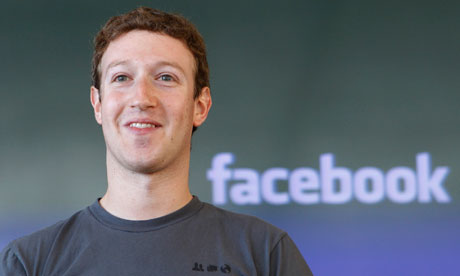
Why Mark Zuckerberg Is My Source Of Inspiration


Mark Zuckerberg is easily one of the most picked-on entrepreneurs of his generation. Or of almost of any generation now. But why should I be part of the media that unfairly slams and criticizes him for “screwing consumers”, when in fact, all he’s doing is being himself. Mark Zuckerberg established a name for himself at Harvard. And whether or not his name there is a really good one is a different discussion, but he still left a name for himself. Many people fail to leave a dent in the universe, so-to-speak, so I’m just glad that he chose to stand out.
  With power and wealth comes responsibility. And it’s very easy to fall into the temptation of obsessing over one’s wealth and power. Luckily, Zuckerberg didn’t fall into the same trap that many millionaires and billionaires fall into. No, Zuckerberg was different. 
  There are very few analogies that could be made between Mark Zuckerberg and Steve Jobs. But the analogy here is quite apt. Both Jobs and Zuck have an incredibly large personality. They’re both quite opinionated, and while Jobs was more so, Zuck definitely had an opinion. Jobs and Zuck both also resisted the temptation to listen to the media, or to listen to their shareholders. They both had large egos that stretched way beyond the control of their shareholders. That’s a good thing. No, that’s a great thing! They’re willing to get their voice heard over others, and while some may see that as a bad thing, I see that as a quality, that just needs to be balanced. 
   Zuck wasn’t afraid to eliminate artificial boundaries and limitations to get what he wanted for Facebook, even if it meant possibly getting sued by some privacy watchdog group, or getting investigated by the EU. He wanted his vision to supersede anyone else’s vision for Facebook. He had absolute control, an advantage that both Facebook and Apple had by having strong, competent leaders.
  Sure, Zuckerberg isn’t perfect, and neither is Jobs, or anyone else of their personality. But being able to make a mistake and move on is a great characteristic that Facebook has. Haven’t you noticed that every single privacy lawsuit, every single investigation, hasn’t damaged them much? Facebook can withstand impact by people that think they’re power is greater than Facebook’s. And every time they lose, because they think they’re more powerful than Facebook, which is absolutely ludicrous. 
  Of course I’m going to get negative scrutiny for so vigorously defending Zuckerberg, but everyone has to have an inspiration. Sure, Zuckerberg isn’t the world’s greatest public speakers, and yes, he can be socially awkward at times. But the question I must ask is, would you rather be inspired by someone who has an iron will, like Jobs or Zuckerberg, or would you rather be inspired by someone who is weak and ineffectual? 
   There are lots of other character flaws with Mark Zuckerberg that I haven’t addressed here. There’s no doubt in my mind that he could improve, but he’s already a better leader than many of the leaders of the last generation tech companies. While all the last generation companies look at how they’re going to survive, Zuckerberg is thinking ahead of the curve, not just simply, “How can I improve the situation I’m in right now?” And as a result of such intelligent thinking, he is thriving, not merely surviving. 
  Also, he’s not a number cruncher. He’s a geek! He doesn’t justify decisions based on financial pros and cons. He justifies actions based on his own will. That’s why I’m inspired by him. He’s not the average money cruncher, that just takes the title and control for the paycheck. He does it, because he loves it! He doesn’t do it for any other reason, and that’s what inspires me! 

Friday, September 7, 2012

My Incredible Dream


Hi. My name is Steven Styffe. You don't know me, and so I understand if you decide to click away from the writing and find something better to do online with your time. No hard feelings. But I would love it if you would stick around and read my story and hopefully you'll find some inspiration in what I call my 'incredible dream.'

I am 16 years old. I was born and raised in, originally, a family of 6 in Orange County, in Southern California. In 2008, my family expanded. My parents successfully adopted 3 children from Rwanda, Africa. The ages 13, 12, and 9. This now puts me in the middle of the age spectrum. My oldest sibling is 24 now. So with me being in the middle of the family, I started becoming worried about being lost, or invisible, in a large family.  The challenge for me was to, in a positive manner, make myself stand out. Display some skills and passions of mine that would allow me to differentiate myself.

I am a technology enthusiast. My passion is in digital technology. I grew up, learning to use the computer as early as 3 years old. That early-on interest in technology has what led me to continue down the path of a career in technology. At 15, I started my own, now discontinued, technology podcast that allowed me to express myself. I was so thankful that the Internet brought me my opportunity to do that. And while that idea didn't catch on, I'm still thankful for the lessons I've learned from that. I'm also extremely appreciative of the Internet, since it gave me a positive identity that I could control, and it's allowing me to write to you today about my very passionate dream.

Living in Orange County is a difficult challenge for me. The problem with living in such a small area is that the technology education isn't well developed here. My technical education has been mostly established thanks to my next door neighbor, his garage, and the Internet, which has made technical education much more easily accessible. But I wish to expand beyond what a free, online education can bring me. At my local high school, which I attend, there are no technically oriented class offerings. There isn't any computer science course, or robotics or AI course, or anything remotely like that. They don't even offer an electrical engineering course. It's very easy for me to get discouraged by these challenging odds. But I haven't lost hope.

Part of me instantly wants to say that it feels kind of wrong, or at the very least, cliché for me to try to promote my 'incredible dream.' But I had to beat that part of me and try to make a name for myself...to try to reach my dream. So that is what I'm doing. I'm desperately hoping that there would be a chance for me to get a great high school quality education in electrical engineering and computer science. I've always loved the inspiration that technology has given me, and I would  hope to be further inspired by a once-in-a-lifetime opportunity to get a great education in those areas (electrical engineering and computer science).

When all is said and done, and if I discover that this doesn’t catch on, at least I will have learned to make an effort. I’ve learned from many failures in my life. I can speak from experience. Failure hasn’t been the fear for me. I’ve always been willing to take a risk so that I could achieve my dreams. I’m taking that risk now. And all I’m hoping is that you’re listening. 

If you think you can’t make a difference for me, you’d be very wrong. You can make a huge, significant difference just by sharing this. It would mean the world to me if you would share this message with someone you think could help. Just share it! Period. That by itself would make the world of difference for me.

I'm trying to reach what I thought would be impossible. The question is, can you help me achieve the impossible?

Thursday, September 6, 2012

The Not-So-Obvious Reasons To Ditch Java

  Java has had a painful history. Java, the cross-platform programming language originally developed at Sun Microsystems by James Gosling, has been more recently contained flaws in both the runtime environment and the core set of methods that were provided by Sun, now Oracle. Java has proved to be the prime platform of choice for malware and virus authors to exploit users. The difficulty for us in the technology sphere is to convince users that Java should be disabled, if not flat out removed, if they're not using it. We've seen Java been used before in famous cases by malware authors. The Flashback trojan horse for Mac OS X was put in place, thanks to a flaw in Java. Java is constantly under attack. And so from the user's benefit perspective, it is definitely beneficial to not run Java on your system unless you absolutely have to.

 But there is a not-so-obvious reason to ditch Java. Java is a very outdated technology that was designed to tackle a problem that programmers had ages ago, that dates back to before the Internet became mainstream.  Back in the day, software programmers had the issue of choosing which platform to write for. Learn and dedicate themselves to the programming language and the set of APIs that corresponded with the operating system they wished to develop for. Java solved this issue with being one of the first to adapt the 'write once, run everywhere' model. In which one set of high level language code could be compiled into byte code, or machine readable code. Java did this well. And it worked well. The problem is that, besides the fact that Java now (inadvertently) has the 'write once, infect everything' malware model, but the other problem is that the language is outdated. It shows it's age in the way it's structured. And while the other popular high level languages show their age too, but Java shows it's age and brings much more serious problems to developers when they choose Java over another language. And with every new release, the language just gets older and older, and every release becomes either less significant, or the language just gets less and less useful.

  Let's expand on that idea that Java becomes less and less useful overtime. The big issue with Java is that the fundamental principles behind it have faded away. The original team behind Java doesn't work on the project anymore, and since Oracle acquired Sun, the language has gotten worse. The moral principles behind Java are gone. Oracle suffers from corporate greed, in which this flaw takes over what could've been a better vision for Java, but instead, they just made it worse. Instead of maintaining it more openly, in concert with the  Java community, they decided to try to make it as proprietary as possible, and in turn, making them responsible for new iterations and security patches. By making it more proprietary, Oracle has demonstrated that they don't care about Java, and they don't care about the developer and user community that was formed around it. Oracle is essentially sending a big middle finger to those who put their soul into writing with Java. And Java is not the only example, MySQL (also a Sun product), and VirtualBox (also a Sun product), have also become, or at least Oracle has attempted to make it, more proprietary. So it's clear that under Oracle's management, all of these great products have turned into crap. And that's a shame!

 But thankfully, HTML5 along with Javascript and CSS3, have made web applications a more viable, and more future proof, way of developing applications, that brings most of the benefits of Java, without most of the security problems that Java brings along. And to the benefit of consumers, and to the determent of Oracle, they've made Java become less relevant, and easily replaceable by newer and better technologies.  And hopefully, with all I just said, we'll see the death of Java become more of a plausible event rather than merely a wish of software developers.

Monday, September 3, 2012

Rundown of the (Rumored) Fall Announcements

This season is going to be, without a doubt, the busiest season of the year for the industry. If all the rumors are true, these are the announcements that are rumored to be scheduled:

Apple event/events - There are rumors circulating (and come on! we're all expecting it) that Apple will hold an event to launch the highly anticipated next iPhone. There have been rumors also going around that Apple will host not one, but two events. One for the new iPhone, and one that falls in line with their regular fall media event. Focusing on the iPods, the iTunes Store, and possibly even an iPad 'Mini'. (September)

Nokia event - Nokia is scheduled to launch their lineup of Windows Phone 8 devices there. Rumors have circulated that, and this seems crazy to me, but they may also launch a Windows RT / Windows 8 tablet at the same time. Again, seems kind of crazy to me. (September)

Amazon event - Amazon is rumored to launch the second generation Kindle Fire as well as a revamp of the other Kindle devices as  well. Although I personally don't believe that Amazon will revamp the entire lineup because they've not too long ago updated their original Kindle lineup (excluding the Fire) (September)

Windows 8 General Availability - Not too much to say here. Windows 8 (devices and upgrades) will become available on October 26. Nothing new there, we've known that for a while. At the same time, Microsoft's Surface (Windows RT) based tablet will launch according to rumors that don't seem to far off the reservation.


Thursday, August 30, 2012

Here's How Facebook Can Beat The Analysts


Over the past couple of weeks, stock analysts on the Internet have started writing stories about the demise of Facebook. They all sort of embodied the same ideas and the same principles that state what they believe are the flaws in Facebook. First off, I don't believe that some of the ideas that analysts have been presenting are completely rational or accurate. But also, Facebook still has a chance. I believe that one of the big flaws in the analysts' views were that they almost all agreed that Facebook had little chance to turn the tide in their favor. To me, it makes no sense to think that Facebook doesn't stand  a chance. All Facebook needs is a little coaching from the Internet. We've seen trends like Facebook before, and if history is any indication, that the expert advice from the few of us that contradict the popular opinion, our, being everyone against the analysts, is solid advice.

  One of Facebook's problems is of course getting into mobile. We've all seen the headlines lately that have been blasting Facebook for lacking a good set of mobile applications. That's very true. Facebook clearly needs to make mobile computing a priority for their future. And while Facebook has recently updated their mobile apps for Android and iOS, it still isn't enough. The update was largely insignificant and didn't put them on the path to beating the overall trend that analysts and investors have set. Facebook desperately needs to make mobile a priority. The biggest problem with the mobile versions of Facebook is the user interface. It is painfully slow and is complicated and a pain to use. The experience of using Facebook on a mobile device is terrible. But so is the desktop website. The desktop website needs a makeover too. The user experience overall on Facebook is bad. And so Facebook needs to make the user interface overall, both on the desktop and on mobile devices, a priority.

  Some have claimed that Facebook just needs to improve on selling ads to the user. And that's an easy thing to say, but I don't think that's the case. They're doing just fine with selling ads and there is no clear indication that ad sales will be dramatically slowing down in the coming months. While yes, Facebook isn't as skilled at selling ads as Google is (but frankly, no one can beat Google), Facebook is still performing up to a reasonable standard.

  The biggest issue for Facebook is finding a niche. This was a big realization for me. Facebook needs to find a niche in online services. Is it going to be the core social networking features, like Chat, posting pictures and sharing statuses, or will it be something else? I can point to lots of evidence of how finding a niche can really help prevent a big company from becoming irrelevant in the web era. Myspace hasn't become irrelevant because they found a niche. Myspace is primarily now the place for musicians to gather. It found a niche and stuck to it, and is now seeing the benefit of not becoming a ghost in the web 2.0 era.
On the other hand, there is plenty of evidence that not finding a niche, and doing the opposite, essentially becoming an all-things-for-all-people kind of a service, can hurt the future of a web business by making it irrelevant. I'm afraid that Google is doing that with  Google+. Google isn't content with Google+ being for a niche market, or only serving a small purpose. But they forget that by trying to be an all-things-for-all-people kind of company, they make the risk of becoming irrelevant in the years ahead. Facebook can suffer from a similar fate of that of past web services if they fail to target a niche audience. So far, Facebook has targeted a way too large audience. As a result, we see that their user experience is cluttered and as a result makes it less attractive to users and makes Facebook a less enjoyable experience altogether.

  In their current strategy, Facebook is failing. But it's not too late to change. They can, and should, turn the trend in their favor. They need to make a better user experience overall, and on the mobile platforms, as well as finding a smaller, more dedicated audience (finding a niche), that will help Facebook ultimately stay relevant in the coming years.


Friday, August 17, 2012

Windows 8 Has RTM'd; What's The Bottom Line For Consumers?

   One of the hot topics of tech this year has no doubt been Microsoft's entry into the tablet space by launching Windows 8 and Windows RT, and more recently announcing their Surface tablet. It's been a long journey for Microsoft. After months and months of development, Windows 8 has finally RTM'd, or released to manufacturers. This essentially is a almost completely ready-to-ship version of Windows that OEMs (manufacturers) are now testing out on their hardware before Windows 8 goes on sale to the masses in late October.

   Windows 8 has stirred up a lot of controversy from the start. The controversy over the new Metro UI (I'll call it Metro despite the fact that Microsoft isn't calling it Metro [for legal reasons].) The new Metro UI focused around tablet computers. While the Metro UI has been praised by some, others have been extremely critical of it, saying that the new UI makes Windows no longer Windows as we think of it today.
Microsoft's biggest problem of course was that they should've made Metro a completely separate product, instead of trying to mix it in with the Windows brand. Instead, Microsoft tried to combine the Metro tablet experience with the traditional Windows desktop and behold, Windows 8 is born.


This is the "Metro UI' as Microsoft has been calling it, although they don't call it that anymore. At the heart of the user interface, which involves prominently displayed tiles that feature interactive content that helps you get the most out of your tablet, without ever entering an application.

Now despite the negative opinions of Windows 8, I'll try to explain it rationally. The case to be made for Windows 8 is quite simple, but just requires a little bit of a thorough explanation to ensure that the consumer really knows what they must sacrifice when they purchase a Windows 8 or Windows RT tablet.

1. The Metro UI
 The Metro user interface involves tiles that are capable of displaying personal information that will help you get the most out of the Metro interface. The benefits of these tiles is to display important information from the app on the Metro interface, instead of explicitly visiting the app. This interface was designed for touch enabled computers, like tablets and desktops with touch capabilities. Applications that run on the Metro UI can only be run on the Metro UI. In other words, these apps don't run on the desktop. They run in this interface.

2. Desktop Applications
  Unfortunately, one of the main areas of confusion around Windows 8 is the desktop. With Windows 8, you can have two types of devices. You can have the traditional x86 (Intel or AMD) based Windows 8 computer or tablet. Or you can have an ARM based tablet. The Intel or AMD based devices will run Windows 8, while the ARM based devices will run Windows RT, which is a special version of Windows 8 designed to take advantage of the features of the ARM platform. The important distinction is made around desktop functionality. Windows RT, or ARM based devices, can only run third-party, non Microsoft apps, in the Metro UI. So with Windows RT, third party apps can only run in the Metro environment. With a full Windows 8 device, you can run third party apps on the desktop. 

3. The Desktop Has Been Stripped Down
  One of the things that I find disappointing about Windows 8 is that the desktop has been stripped down. What do I mean by 'stripped down?' At least in my opinion, all the features that I fell in love with in Windows 7, all the UI improvements, such as the Aero visual effects, have been stripped down to bare bones in Windows 8. So if you're someone, that like me, loves the Windows 7 desktop, you'll likely hate the Windows 8 desktop, as Aero has been stripped down and the visuals of the desktop have been changed drastically. 
4. The Benefits of Windows 8, and yes, there's even benefits for desktop users.
  There are benefits to upgrading to Windows 8, even if you're using a desktop. Although primarily, upgrades would be helpful for those with existing Windows tablets. Windows 8 includes dramatically improved boot times, and overall, the OS does indeed feel snappier than Windows 7. And while those aren't the only features worth noting for desktop users, they are the big ones. The biggest benefit of Windows 8 is marketed at potential tablet customers. Those that are interested in tablets will probably receive the most benefit of waiting until Windows 8 releases to purchase a new tablet / laptop-hybrid. 

5. The Benefits of Purchasing a Windows RT Tablet
  So far, I've only spoke about the downsides of Windows RT. But the benefits of Windows RT, that is, choosing to buy an ARM based tablet, may almost outweigh the consequences. The big marketed factor of ARM based devices is efficiency. The architecture of ARM is designed around immensely higher processor efficiency, and therefore, much better battery life. And while that is the concept, we will have to wait and see whether the OEMs deliver on their promise that ARM based devices provide better battery life. 

So what does it mean for me?
  Windows 8 is ultimately centered around a multitouch experience. Windows 8 really shows off the potential of tablets, with showing the promises of the Metro UI. Microsoft has launched its own application store for 'Metro style' applications which should populate with more apps as we near the launch of Windows 8. My recommendation for you is to wait until we see a healthy variety of both RT and Windows 8 based devices to compare the pros and cons of each. Until then, just consider the trade offs of going the Windows 8 route versus the iPad route or the Android route. Each ecosystem has its own pros and cons, so consider each before making a solid decision. Right now, I'd recommend not making a final decision until, at the very least, Windows 8 releases. And if you're a desktop user interested in upgrading, I'd try to discourage you to the best of my abilities because the benefits of Windows 8 are pretty much entirely focused at tablets. This isn't much of an upgrade for desktops, but it sure is a big deal for potential tablet buyers. Windows 8 will be available to consumers on October 26 at the upgrade price of $40 for existing Windows users. 


Thursday, August 16, 2012

Apple's and Samsung's ridiculous "copycat" claims

   If you haven't been following the monstrosity that is the Apple vs. Samsung trial, then I'd recommend you catch up. There's a lot to catch up on! This trial highlights the problem with the way the legal system is setup in the United States, as well as the patent system. As I write this article, I'm trying my best to remain impartial, because frankly, both companies have made some ridiculous claims so far and I'm sure they'll continue to make ridiculous claims. Or at least Samsung will continue to after Apple wraps up their side of the story.

 Of course I could write a lengthy post about how the patent system is messed up and yes, the article would be very accurate, but I believe the point has been well made by practically every journalist now, even the Apple apologists. I could also write a lengthy post about how the legal system in the U.S is also messed up, but that point has also been presented quite well. The thing I'm convinced is that both Apple and Samsung have not owned up to what they have done.

 The whole Apple vs. Samsung battle has started more than a year ago now, with Apple suing Samsung over the trade dress of Samsung's Android based smartphones. Essentially, trade dress is the appearance of the phone in both the physical hardware and the UI. And you can't blame Google for the design of Android on Samsung's devices because Samsung puts their own proprietary user interface on their smartphones on top of the Android operating system. So at no point can Samsung nor Apple assign any blame on Google for the alleged trade dress infringement. But the lawsuit quickly evolved and Apple learned some interesting legal tactics that they could take to hurt the Android device manufacturers, and therefore, hurt the Android ecosystem. Apple would quickly start launching patent infringement lawsuits against Android OEMs and this would start Apple's epic war against Google and the Android ecosystem. The Apple versus Samsung trial is certainly the most widely covered one by far and the most interesting to cover.

  My issue with the whole lawsuit is that both Apple and Samsung have performed anti-competitive measures to destroy their opponent. And I'm not just referring to "copying" each other's products. However, the big debate is over whether or not Samsung copied from Apple's design of the iPhone and iPad. This is a huge lawsuit that covers a range of 17 different products including accusations that Samsung was inspired by Apple's iPad, and therefore made the Samsung Galaxy Tab series of tablets (the 7, 7.1 and 10 inch models) as well as the incredibly successful Galaxy S line of devices.

 There have been valid points made by tech pundits that defend both sides, however, the lawsuit isn't black and white. I'm sure that there is a case to be made that Samsung was inspired by Apple, but there's also a point to be made that Apple could be jealous of the success of Samsung and is being inspired by Samsung. I could see a lot of unique features that Samsung developed in their line of phones and tablets that are really unique and that Apple felt inspired enough to mimic the functionality of these unique set of features that Samsung developed. The Samsung S-Pen, which is essentially just a stylus, and the "Tectiles", which are essentially just NFC enabled tags that can be used to perform certain user defined actions.

I will wait with anticipation for Apple to launch their next generation iPhone to see what functionality resembles that of the feature set Samsung originally had in their phones. I would have to imagine that Apple will have been inspired by Samsung to a certain extent to mimic some of the hot features of Samsung's phones. It wouldn't surprise me at all.

I'm sure that Samsung did feel at least partially inspired by Apple to make their own smartphones that would attract existing iPhone lovers. There's no doubt in my mind that Samsung did feel pressure from Apple and decided to target some of the iPhone's features and implement them in their own way, or at least what Samsung would define as "in their own way."

But looking at the big picture, I don't see Apple's case that Samsung mimic'd Apple's iOS bit by bit. Comparing user interfaces on a surface level doesn't make a case for Apple or Samsung. I'm confident that even a typical user wouldn't be confused by the looks and appearances of the iPhone and Samsung's Galaxy S phones. There are at least a few noticeable differences and that unless a consumer is really not that observational, the differences could probably be distinguished and therefore that would diminish the value of Apple's case.

Overall, Apple's case is ridiculous. Being impartial, I believe both sides are not in the clear, and I feel that both companies have engaged in mimicking behavior to a certain degree, but not to a great degree, as Apple claims. But it all comes down to the judge's ruling. My true desire would be for both companies to stop litigating and to start innovating. Unfortunately, both parties have engaged in legal warfare and now there's no way out of it. We'll just have to sit back and watch. And I hope that the judge makes the right call by not declaring either side of the winner. Send both Apple and Samsung home...neither of them deserve to be called the winner.

Saturday, January 21, 2012

My rant about paid Android applications

Why is it that Android users tend to spend less (or even none) on their apps? Is it because they're too "cheap" to pay for apps. I tend not to think so. I tend to think that it is simply because the a good portion of the apps (especially on the Android Marketplace) are free. I personally find that there are very few apps on Android that really look compelling that its worth paying for. And many of the paid apps are overpriced pieces of crap that don't work well on most phones (thanks in part to fragmentation) The really high quality Android apps are WAY overpriced. Example: The average price of an Electronics Arts application on Android is $7, and the reviews are typically 3 stars, since they don't function properly on most devices and the actual app itself has poor content for the price. 

Here's some tips to developers and companies trying to get rich off of the Android platform:

1. Design the application to function well on as many devices as possible. (I've explained this already.)

2. Make it worth its price, or drop the price! Add good content, or make the app more affordable. It's that simple!

3. Make sure the content and the application itself are updated fairly frequently. This especially applies to games. If I spend more than $3 on a game or any app, I think I'd like some occasional new levels or bonus content. 

4. Listen to reviews and complaints. They're helpful (well, at least most of them). Many reviews I notice tend to detail the exact problem the reviewer is having with the application. 

5. Ensure good customer service! I can't stress enough the importance of good customer service. That should be the priority of every company and software developer. Unfortunately, most of the time it isn't. So why don't you break the trend?!


Saturday, December 17, 2011

Reflecting Back to 2011

  It's that time of year again. While many journalists in the technology industry tend to make some ridiculous predictions for the coming year, I have cautiously avoided that route. Since the problem with making predictions is that timing is key, and many times, journalists' predictions tend to be off on timing. At any rate, I have decided to reflect back and review the big technology news and products of 2011.

3DTV (failure!) - Back at the Consumer Electronics Show (CES) in Las Vegas at the beginning of 2011, the big push of the television manufacturers' was on 3D television displays and 3D content. There are so many things wrong with 3D that I don't even know where to start. There was very little 3D content to begin with, and very few (high quality) movies were produced in 3D. Also, the need for glasses on many of the traditional, non-passive 3D displays, tended to make 3D very much a gimmick, and the fact that the glasses were expensive didn't help it much. Even with the non-passive 3D televisions, in which you didn't need to wear glasses to achieve the effect, didn't perform very well (in terms of 3D playback). The fact that 3D televisions only shipped with one pair of glasses, and the fact that the glasses were expensive didn't entice consumers, and as a result, didn't sell very well.

The invasion of Android tablets - One product we will see more of at CES in 2012 is tablets. In 2011, manufacturers started ramping up production of what they thought of as "iPad alternatives", when in fact, they weren't very much alternatives at all. The user interface on these tablets were terrible, and they didn't have very much applications or content to play with, and the overall hardware experience was poor. But in the later half of 2011, with the launch of Android Ice Cream Sandwich, some newer tablets will actually carry promise. Amazon launched the Amazon Kindle Fire, which is a two hundred dollar tablet running Android, but from the appearance, no one would be able to tell it was running Android. It has a skinned version of Android that grants you access to Amazon's wide variety of e-books, movies, TV shows, music, and applications that you can download for it. With the launch of the Kindle Fire, Amazon has set the standard for what Android tablets need to have. A low price point, and a great content eco-system in which you can acquire great movies, music, e-books, and apps, from one source. And while the Kindle Fire doesn't really compare to the iPad (you shouldn't really compare it to the iPad), it is an attractive offering for those who have a strict budget and want some of the capabilities of an iPad.

The Internet is the place to start real-world revolutions - Throughout the year, we have seen numerous real world revolutions start thanks to the Internet and social media. Egyptians started the concept by starting their revolution on Twitter, and rapidly gaining supporters through means of social media like Twitter and Facebook. Will Google Plus have the same opportunity to ignite a revolution? I can't really answer that, but is sure is possible based on what I've seen so far. The idea has spread far and fast, since other Middle Eastern countries have tried to gain liberty through the start of a revolution, thanks to the many possibilities of the Internet.

Apple's iOS ecosystem gets overhaul with iCloud and Siri - Apple has rapidly pushed their iOS ecosystem forward. The iOS platform consisting of the iPhone, iPad, and iPod Touch. With the announcement of iCloud earlier this year, and the launch just a couple months ago, Apple is pushing all their users towards the cloud. This isn't exactly a quick transition, but some of the offerings of iCloud will compel their users to trust Apple with their data. This makes Apple more of a center point for many iOS users, with the trust of Apple for music and movies, as well as apps and now, online storage of their data. However, iCloud really is mostly useful for iOS users who have been sucked completely into the platform. Those who don't hold much of a love for Apple won't find iCloud necessarily compelling.
The release of the iPhone 4S also delivered a very interesting feature, known as Siri, which is a digital voice powered assistant. Siri, which is exclusively available on the latest iPhone, (although I'm sure they will bring it to other Apple devices eventually) can respond to various voice commands. You could ask Siri to call your spouse, send a text message, send an email, give you directions to the nearest cafe or library, provide you with weather information, and more. Oh, and Siri isn't just a plain old boring artificial intelligence system, it also provides you with hilariously stupid remarks to silly phrases you say to Siri. It is an incredible feature, and while it is in beta, you can look forward to major improvements in the future. This is just the beginning of a future in which we interact with the device less, and interact with people more. Siri is clearly a move by Apple in the steps of Steve Job's vision, which was that technology gets out of the way for the user to achieve what he or she wants.

The Passing of Steve Jobs - One of the saddest days of the year, was the day of Steve Jobs's passing. Within a mere minute of Apple announcing Jobs's death, all mainstream media started reporting it and the Internet was devastated. Twitter activity was very close to reaching an all-time high. People, even the non-enthusiasts, started mourning for the loss of an incredible genius. I, too, was mourning for the loss of Steve Jobs. At that moment, it was extremely difficult for me to imagine a world without Steve. The creator of one of the most iconic and recognizable brands in the world, passed away. Jobs was suffering with a rare form of pancreatic cancer for almost 7 years. At times he appeared in better condition than other times. In the last couple of years, his health had been draining at a faster rate, and at the last Apple event he spoke at, he appeared thin and fragile, and we all tried not to speculate too much into his health, but we all knew it was inevitable.
Steve Jobs had an extraordinary vision of simplicity, design, and overall good taste, that very few had. His, sometimes extreme desire of simplicity and elegance, led to remarkable products from the first Macintosh computer, to the iPhone and iPad. And I think we will continue to see his legacy at Apple for some years down the road. The concern that I share with other technology enthusiasts is, when will the legacy come to an end. Steve left Apple in very good hands, with some of the brightest talent working very hard to build great products, but at some point, without the leadership of such a visionary, the legacy will end. I'm not trying to predict the end of Apple here, but the legacy will die off eventually. When that happens, people will start to panic.
I don't want to spoil too much about Steve's life, so if you have a greater interest in knowing the whole story of Steve Jobs, I recommend you read the authorized biography of Steve Jobs, written by Walter Isaacson. 


Friday, December 9, 2011

HP Will Not Sell WebOS, and Will Continually Support It

   After more than a year of misdirection under the reign of former HP CEO Leo Apotheker, the successor to Apotheker, Meg Whitman, has formally announced on Friday that they will not sell off the WebOS division. This all comes after Leo Apotheker announced his intentions to sell off, not only the WebOS team, but the PC division as well. After being fired from HP in September, Meg Whitman took control and promptly cancelled their plans to sell the PC division, while continuing to say that they were not sure what their plans were for the WebOS division yet. Now, HP has reached the conclusion that they should not, and will not sell the WebOS division.

  WebOS was Palm's attempt at competing with in the smartphone industry, but only to be acquired by HP, and be misguided under the poor management of Leo Apotheker. WebOS was an operating system that ran on Palm's smartphones, including the Palm Pre series of devices. As it turns out, the Palm Pre was a costly nightmare for Palm, since it was plagued with bad reviews by almost every single tech media outlet. The Palm Pre hardware specifications were low, and was quite sluggish. Then HP comes out of nowhere and buys out Palm completely. But despite new management, the Pre line up of devices were still bashed by technology journalists and as a consequence, did not perform well.

  The final decision from HP to not sell WebOS is actually a bigger deal than what is first surmised.  Meg Whitman, CEO, and Mark Andreessen, board member of the company, spoke out in an interview with The Verge. Over the course of several questions, Whitman and Andreessen have announced that they will completely open source WebOS. And that translates into HP releasing the source code for the mobile operating system to the public, allowing anyone to write applications, with less hassle, for WebOS, or for modifications to be easily developed. While the average consumer probably wouldn't be excited by such news, technology enthusiasts have been excited by the new possibilities of the open sourced platform.

    While HP has decided not to sell the WebOS division, it is important to note that they will not continue selling the Pre line of smartphones, but instead, they see a future with WebOS running on future HP tablets that, hopefully, will be a little more stream lined and faster than the Touchpad, which was HP's first effort at a WebOS tablet, which was not as successful as one would have hoped.

   The situation with WebOS just got a lot clearer, but will not be completely clear, since we won't see HP's full vision for WebOS until sometime next year. I really do like what Palm did with WebOS's interface and design, and seeing that it will have a better future is one that I might appreciate someday. I look forward to seeing another competent competitor in the mobile space, both tablets, and smartphones from other vendors. And despite WebOS's past, it has a clear(er) future and one in which I could see it surviving as a competent mobile platform.

Saturday, December 3, 2011

Carrier IQ Analyzed; Unclear Whether Consumers Should Worry

Privacy advocates all over the United States have been upset over some reports that have surfaced over the past couple weeks. Various stories were published that reported that the U.S wireless carriers install hidden spyware known as Carrier IQ that tracks users. The question up to this point is what is Carrier IQ tracking. Unfortunately, the answer is not clear. According to all accounts, Carrier IQ does track non identifiable information, anonymous usage data of users’ smartphones that helps the telecoms improve network performance. But that is not the only thing Carrier IQ appears to be tracking. The spyware is also capable of sending text message and user input to the carriers as well. And while Sprint and AT&T have both come out of their shells to say that they are not gathering user inputted data, but only gathering anonymous usage data to improve network performance. But as you are aware, big corporations are very capable of lying, even unintentionally, so while it is possible that what they say is true, it is even more possible that the PR spokesmen/women could be mistaken. And to be technically correct, Carrier IQ can be labeled as spyware, since it is installed secretly and not made known to the user, nor given permission by the user to be installed. Those who play the role of devil’s advocate have said that the intentions of the wireless carriers are not malicious, but my point to be made is that nobody is sure of the intentions of AT&T, Sprint, or T-Mobile, all of which are suspects of installing the spyware on their smartphones. Verizon made clear that they did not put Carrier IQ on their devices, but some skeptics suspected that Verizon had their own mechanism of tracking users.

[Thanks to Joyoftech.com for the great visual!]
The company that has designed the Carrier IQ software for the wireless carriers is now facing legal issues, as they are being sued for breaking certain wiretap laws with Carrier IQ. These suits are just the beginning of more trouble, not just for the manufacturer of Carrier IQ, but also for the wireless carriers. I wouldn’t be surprised to see if the FCC started probing the telecoms for information regarding their use of the software. The whole story of Carrier IQ may not be complete, since I’m expecting a spokesman of T-Mobile to publish an official comment on the behalf of T-Mobile. So while the story hasn’t completely developed yet, this is what we have discovered so far. Expect much more to be made known in the near future.

Thursday, November 24, 2011

Protect IP Aims to Censor the Internet; Protect Big Corporations


  In October, Congress proposed a new law known as Protect Intellectual Property (Protect IP) Act.
The proposed bill, also known as SOPA (Stop Online Piracy Act) in the House, suggests that
"copyright infringement" is a felony, and thus anyone who "infringes" on copyright shall be accused of a felony. The possible charges for copyright offenders is up to 5 years of prison.

  The ethical problems with this proposed bill may not be immediately obvious. What supporters of the bill won't tell you is that even a normal user online could be accused of copyright infringement and could face felony charges. The part that I get very upset about is that Protect IP even labels non-commercial use of content as copyright infringement.

  But normal users and internet citizens aren't the only ones who can be punished through this act. Websites that are "suspicious" of hosting files that violate copyright can be censored, which is the nice way of saying that they can be blocked at anytime.

  There are more than political problems with this bill. If Protect IP went into effect, this would prevent technically sophisticated internet users from using their own DNS system with reliability. It is not the fact that DNS wouldn't work, it just wouldn't be reliable or secure since the government would hold the right to peer in on any connection, even ones routed through private DNS systems.

  While the Business Software Alliance, an organization made up of Microsoft, Apple, Adobe, and other major corporations have supported the law, some well known organizations have opposed the law as well. Such organizations include the Electronic Frontier Foundation, Mozilla (makers of the popular browser, Firefox), Creative Commons, and Wikimedia (the corporate parent of Wikipedia).

 Individual citizens can also make a difference by calling your Congressperson and let them know that they think Protect IP is a bad idea. And I encourage you to do so. Also, any website or blog owner can put a banner on their website that reads "site censored" which basically displays the possible risk that the government could censor any website. You may notice that I have put that black banner on my blog as well. If you would like more information on why Protect IP is a dangerous threat to American freedom, you can visit American Censorship Day's website. 


Friday, November 11, 2011

Adobe Announces the Discontinuation of Flash for Mobile Devices

Steve Jobs must have been dancing in his grave this week, when the news broke officially from Adobe that they will be discontinuing Adobe Flash for mobile platforms. While Blackberry and Android users will still be able to receive security updates for the flash player, any users who did not already download Flash for Android or Blackberry, will no longer be able to do so.

If you weren’t paying attention, Steve Jobs famously started an anti-Flash rant with the launch of their iPhone in 2007, stating that Flash will not be permitted to run on any iPhone, and later, the iPad. He went on to bash Adobe, saying that Flash is a performance sucking power hog that depletes the battery life of devices, all too quickly. To this day, those accusations are very technically accurate. Adobe’s Flash Player, even on the most powerful computer, will not run well. It drains performance out of any device and consumes way too much power. Not to exclude the fact that Adobe Flash is also very out-of-date in terms of security. Hackers have found various ways to infect people’s machines through the Flash media player.

Adobe’s Flash for mobile will not be missed by anyone. Much to consumers’ dismay, Flash media player is considered a necessary evil. Since Flash media player is widely used as a plug-in for video on many websites, such as YouTube, although they are transitioning to an HTML5 based web video player, but is still in beta. Adobe’s Flash player is also known to be the plug-in of choice for many web based applications, such as online games.

Despite the fact that majority of the world’s interactive content has been using Flash up to this point, there are websites and content producers that are switching to HTML5, which is the new open standard for the internet, that won’t require consumers of such content to download any bloated plug-ins at all. The most notable push to HTML5 has been from Apple, and Steve Jobs, with the major push to open web standards that are not bloated as Flash is known to be. The transition to HTML5 is occurring, and while it is not exactly happening in a heart beat, it can be said that the transition is moving along just fine.

While it is to the perception of consumers that Adobe is not happy about discontinuing Flash, that is not the case, or at least Adobe does not want consumers to think that way. Adobe released a statement that goes like this. “HTML5 is now universally supported on major mobile devices, in some cases exclusively. This makes HTML5 the best solution for creating and deploying content in the browser across mobile platforms.” Danny Winokur, Adobe’s vice president of interactive development. Mr. Winokur also tried to convey the public into thinking that Adobe didn’t lose to Apple, but rather “was listening to its customers.” Whether or not this is the case is up for debate, but the point is that HTML5 is the future of web content and Adobe has finally come out of its shell to admit just that.

Keep in mind that only the mobile versions of Flash player have been discontinued. Existing users of Flash for Android or Blackberry can use it and will continue to receive security updates and patches. The desktop versions of Flash for Windows, Macintosh, and Linux will still be supported and continually developed, but I have to think at some point that Adobe will completely give up on Flash and will show its support for HTML5.

Friday, October 28, 2011

Hewlett-Packard Decides Not to Sell Off Their PC Business After All

Meg Whitman, new chief executive at Hewlett-Packard (HP), has confirmed on Thursday that the company has cancelled their plans to sell off their personal systems unit, formally known as the division responsible for HP’s personal computer business. You may remember that back in August, HP, which was then under the reign of Leo Apotheker, announced that they will stop manufacturing webOS based devices such as the Palm Pre. At the same time, they also declared plans to sell off their PC business. Leo Apotheker failed to mention any company who was interested in buying their PC business. Up to this point, no company announced their interest in acquiring the personal systems division of HP. If any company was interested, they haven’t made any formal announcement, but unfortunately, it would be too late to do so.
Now before I go into why HP would not want to sell their PC business after all, let me give you a review of what has occurred over the past year. Mark Hurd, resigned from Hewlett-Packard due to certain allegations against him (harassment?). Leo Apotheker was then named the new chief executive officer. Under his, what some might call poor, leadership, he announced their intentions to sell the personal systems group to another company, or spin it off into a separate company. In September of this year, the HP board of directors decide to fire Leo Apotheker in favor of Meg Whitman, as the new chief, due to harsh criticism by HP investors and the media.

Meanwhile, HP has not changed their decision to stop manufacturing webOS based devices such as the Palm Pre and the Touchpad.

But what immediately comes to mind, for most people is, “Why did HP pull back on their plans?” The answer is not glaringly obvious, but makes sense when you think about it. Any company the size of HP would have great difficulty spinning off the personal systems division as a separate company. It would be very costly for them to do so and would not be time efficient in the least. While HP does have other strengths in other areas, such as making printers, personal computers are still a large revenue stream. Eliminating personal computers from their product line up would almost completely pull them out from the consumer market, leaving them with business customers, which would severely hurt their client base. Some have argued that personal computers are very expensive to manufacture and bring in little total revenue after overhead. That is a common misconception, but Hewlett-Packard does in fact get a good source of income from personal computers because of the extra product support and software services they sell and bundle with their products. HP simply can’t do that with business products such as printers.

The final solution for HP’s problems is really unclear now. It may not be clear for a while what HP’s strategy is. But I can tell you that it might’ve been, from a purely financial standpoint, a smart move for them not to spin off or sell their PC business. Long term, I’m not sure what HP can do to succeed. All we can do is hope that Whitman can’t do any worse than what Leo Apotheker has done to the company.

Friday, October 21, 2011

Android 4.0 Announced, but Don't Get Too Excited!


Last Tuesday, Google and Samsung executives got up on stage in Hong Kong to announce Android 4.0, known as Ice Cream Sandwich and to announce the first Ice Cream Sandwich phone, formally called the Samsung Galaxy Nexus. The hardware of the Galaxy Nexus integrates very well with some new features of Ice Cream Sandwich, including NFC. Near Field Communication is a protocol that is now integrated into Android 4.0 that allows users to transfer data between devices by “beaming” the two devices, or bumping them together to transfer data. Almost any type of data can be transferred including contact information, maps, applications, website addresses, and more. Although this seems like a revolution in sharing information, you must consider the prerequisites for this to work. For one, both devices must have an NFC chip inside, and both devices have to be running Ice Cream Sandwich. While this is a cool idea and works well in theory, I have to really think hard about a solid use case for this feature.


Google also announced that with Ice Cream Sandwich, the “home” and “back” physical buttons that you commonly see with Android devices today, will become virtual, and on screen, in any application. Also, the “menu” and “search” buttons will cease to exist at all. Web and phone search will now work through the search bar at the top of the screen, by tapping on the microphone icon to dictate your searches, or typing it out through the keyboard. And anyone who likes the menu button will be disappointed, since there is no virtual menu button, but instead, Google is relying on developers to build similar functionality right into their applications. These rules may or may not apply to all devices, but are applied to the Galaxy Nexus, the first Android 4.0 phone. This way of interacting with devices has been before with Android 3.0 tablets, but has never been seen on an Android phone up until now. The buttons will work just as they do in Honeycomb. If you decide to rotate the device, the buttons will rotate as well. As expected, Google will be dealing with a lot of scrutiny for changing the way people will, going forward, interact with their phones. I, like most people, don’t favor these changes very well because I did like the physical buttons that most Android phones today ship with.


The core Google applications that ship with most Android devices today, such as Gmail and Google Calendar, have been updated as well to work with Ice Cream Sandwich, and at the same time, have been improved overall, and have added some major new features, such as offline Gmail, which will allow you to see all emails in the past 30 days, offline, or without using carrier data. This will address some of the issues and concerns that customers have had including the fact that the GMail and Calendar apps were lacking in various ways. Unfortunately, most of the features unveiled in the core Google applications, are suspiciously similar to what Microsoft’s Windows Phone 7 platform has had for a while, and you can tell from the start, just by observing the interface, that Google has been influenced by the success of the Windows Phone “Metro” style UI. Now it is fair to say that Google didn’t completely clone Windows Phone’s “People” application, and to be fair, Windows Phone’s implementation of the same features is much better, not only in the contacts application.


Microsoft’s Windows Phone contacts application left, and Ice Cream Sandwich’s contacts app on right, demonstrates [suspiciously] close similarities between the two contact apps.


The largest concern I have with Ice Cream Sandwich is that older devices, such as the one year old, original HTC Evo, will not receive the upgrade to Ice Cream Sandwich. Inevitably, but unfortunately, the manufacturers and wireless carriers are not likely to support their customers with older phones, as the manufacturers push them to buy new devices. That fact clearly foreshadows the inevitable, which is that the Android platform will only become more fragmented.

Largely, Ice Cream Sandwich is a very big upgrade and a much needed one, and overall, the interface changes are for the better, but things like making the home and back buttons virtual, will just leave customers who have come to know and love physical buttons, upset. I clearly didn’t mention all the features of this major release, but you can get a much clearer sense of what features Android 4.0 brings at the Android website (http://developer.android.com/sdk/android-4.0-highlights.html#UserFeatures). Moreover, Google is lacking innovative ideas, and decided that cloning Windows Phone features was the way to go. I will leave it up to you to determine whether that’s acceptable or, not.

Ice Cream Sandwich will start shipping with the Samsung Galaxy Nexus, which is set to ship sometime in November, since Samsung hasn’t confirmed any more specific details about pricing and availability. However, it has been confirmed that Verizon Wireless will receive the Galaxy Nexus. It is up to manufacturers to upgrade their existing smartphone and tablet devices, but hopefully, even the older devices will eventually receive the upgrade. 


Friday, October 14, 2011

Is the iPhone 4S a worthwhile upgrade?

Friday, October 14th, Apple launched the iPhone 4S, the next generation iPhone. The media was initially disappointed and started posting articles claiming that the iPhone 4S was a "disappointing upgrade" to the now out of date iPhone 4. But there are some notable new features in the new iPhone, that would make it a worthwhile upgrade, that is, if you are no longer enslaved in a contract with AT&T, Verizon or Sprint.

Unfortunately, up until now, the choices for an iPhone have been AT&T (exclusively for the first three generations) or Verizon with the iPhone 4. Thankfully, Apple has partnered with Sprint to allow Sprint to offer the iPhone 4S on their network. This does not mean much for many existing iPhone users, since they probably prefer Verizon or AT&T to Sprint since coverage on Sprint isn't exactly on par with AT&T or Verizon. However, for those who are not locked in an existing contract and subscribe to Sprint, the iPhone 4S is a noteworthy option.

While Sprint becoming the third wireless carrier option to the iPhone 4S is great, there are other important features to point out. The camera in the 4S has been upgraded specifications wise. Most people tend to compare cameras in terms of megapixels, or the amount of pixels a camera can capture. But that does not necessarily equate to higher picture quality. So Apple has decided to add five extra lenses to the iPhone, which allows for "precision elements to shape incoming light" and as a result, they claim that the image will come out much sharper.

The internal specifications of the iPhone 4S seems to be a noticeable feature that mainstream media picked up on.  The processor specifications have been bumped to two cores instead of one, which will make anyone's experience with the 4S much snappier than any of the previous generation iPhones. Applications can take advantage of the new two core processor to result in an overall faster experience.

The iPhone 4S will ship with the new iOS 5 operating system. iOS 5 introduces over 200 new features, but a few mainstream features that are absolutely worth pointing out. For one, iOS 5 includes a new "Notificiation Center" similar to Android's notification bar at the top of the screen. In iOS 5, any application or system notification will appear in a bar at the top that can be slid down to view more details about a given notification. This is a very efficient manner and elegant manner of storing notifications in a non obtrusive way. The new notification center in iOS 5 has been compared much to Android's notification system, which has had this mechanism for notifications much before iOS. At any rate, it's a welcome and much needed feature. iOS 5 also has many less significant new features.

Although most of the features so far don't seem mind blowing, the next one is. Apple has introduced a new digital assistant powered by your voice called Siri. Siri allows you to take control of your phone and perform  certain actions through your voice. For instance, you could send a text message with your voice, request for weather information for a given city, set a timer, or schedule a meeting, only using your voice. You could probably better understand the uses for Siri with a video Apple has provided on their website. Now it is to be understood that Siri is a first generation service, and that it may not work perfectly right away, but it will improve over each generation.

So the iPhone 4S may not be the major leap forward as the iPhone 4 was, but the 4S certainly does deserve credit for being innovative for the most part (notification center being an exception), instead of just copying competitors' features. The question that remains in consumers' minds is "is it worth it the upgrade?" If you are still bound within a wireless carrier's contract, then I would definitely say wait until the next iPhone comes out, since the now rumored "iPhone 5" is expected to be a much more substantial release. If you are in no rush to get a new device then I would wait. The iPhone 5 is expected to release next June with a bigger set of new features, so you should put that into consideration before rushing out to buy the 4S.


Sunday, October 9, 2011

What LTE Means for Consumers

You may have seen or heard of LTE by now, but not quite sure what the term means. But look no further, because you’ve found the right place to find the answer to, “What is LTE?”. LTE is also known as “4G”, which is a faster medium for mobile connectivity through your smartphone. LTE is an acronym for Long Term Evolution network. LTE is the successor to what many smartphone owners know as “3G”. LTE is the technology that Verizon Wireless has adopted as its 4G network. Now while 4G has been officially defined according to the FCC’s specifications, the regulations to market 4G have been enforced very little, and as a result, wireless carriers such as AT&T use the term 4G as a marketing term for their HSPA+ network, which is faster than 3G, but cannot match the speeds that an LTE network could offer. LTE by definition, and theoretical maximum speeds, is within the FCC’s guidelines for 4G. Verizon has taken the time and effort to expand their LTE network to more than 50 cities in the past year, putting 4G on the map for many consumers. Meanwhile, AT&T tries to market their HSPA+ network as 4G, but is not meeting the FCC’s guidelines, and T-Mobile is doing the same marketing sin. Sprint is currently using a different technology, known as Wi-Max, to market as 4G, which is much closer to the FCC’s guidelines than AT&T or T-Mobile. However, Sprint has recently announced plans to completely switch to an LTE based 4G network by 2013. This means that Sprint users would be able to take advantage of really an amazing technology, which will provide them higher data speeds, than Wi-Max, or AT&T’s HSPA+. AT&T is already building out an LTE network as well, but is doing so much more slowly than Verizon, which seems to be launching LTE much more rapidly than AT&T, which has experimental LTE in only a few cities. The benefits of an LTE network may not exactly be clear to you at this point. LTE is a major upgrade over an existing 3G network that all carriers provide. 3G is very limited in bandwidth, compared to LTE, which will make any consumer’s experience much smoother and much faster. The most bandwidth intensive activities, such as streaming a movie off of Netflix on your phone and tablet, will become a notably smoother experience for consumers. The LTE network that Verizon is implementing and Sprint will soon be, will address some of the issues of a traditional 3G data network, such as spotty coverage, and low data speeds. So now that I’ve demonstrated some of the advantages of LTE over 3G or HSPA+, the question must be wondering in your mind. “Why isn’t LTE everywhere?” Unfortunately, the wireless carriers don’t find enough reason to launch their LTE networks at a faster pace. Although Verizon could be the one exception to this statement, since they have been doing a decent job of introducing LTE into new markets. Sprint can’t rush out of their contract with Wi-Max, and really they don’t see a need to, and AT&T is, for whatever reason, not motivated to rapidly launch LTE. I hope AT&T and Sprint are taking notes from Verizon’s 4G launch. There is one other problem with what the carriers are doing, with Sprint being an exception. AT&T and Verizon have introduced data caps on both their 3G and 4G networks. That translates into overage charges for consumers who pass the 2 gigabyte or 5 gigabyte data cap, depending on the carrier. Sprint still offers an unlimited data plan on 3G and 4G, but their CFO was quoted saying that Sprint will continue to offer unlimited data for as long as it’s financially feasible. My concern is that LTE will provide customers with high amounts of bandwidth, but they will not be able to take advantage of those high speeds because of the implemented data caps on Verizon and AT&T. But despite all the potential and current problems with the carriers' policies and LTE implementations, the switch to LTE will ultimately allow consumers to be connected anywhere, hassle free. And since every wireless carrier is actively bringing forward LTE to market, we can expect LTE to arrive in most major U.S cities by the end of 2012.

Tuesday, July 5, 2011

Google Plus Brings a New Challenger to Facebook

UPDATE: I'm now on Google Plus. I believe it is still an invite only service. However, if you manage to get in, you can add me. (Steven Styffe)

Just last week, Google announced a new social networking platform called Google Plus. Google Plus is designed to allow people to connect with friends in a way very familiar to Facebook. In fact, the media and press have even described it as a direct competitor to Facebook. There are a few key features to this new social network that I will explain further.

The first core feature of Plus is social “circles”, which allows you to make groups of friends in certain categories. For example, you could have one circle of friends be all of your co-workers, and another circle be designated for friends you have close relationships with. You can interact with certain circles of friends or with all of your friends. These social groups will allow you to organize and publish only certain content to certain circles of friends. You can control what groups have access to certain information on your profile as well. This is similar to what Facebook has attempted to do with its “lists” feature, but it wasn’t quite as successful and wasn’t quite as elaborate as Google’s social circles.

Another central feature of Google Plus is “Hangouts.” With Hangouts, the idea is that you can have a group video chat from your computer or mobile device with a certain circle of friends, or with any combination of friends. Google is trying to advertise this as a way for anyone to meet with their friends unexpectedly at any time, without barriers. This could be a great way to meet with old friends or regular colleagues without hassle. Ironically enough, Facebook is rumored to have reached a deal with Skype to do something familiar to Hangouts.

If you’ve ever used Facebook to like a certain topic or page on Facebook, then you already have the concept of Sparks, another feature in Google Plus. Sparks allows you to add topics of interest to your Google Plus profile, so when you have a moment, you can view content that is related to those interests you have added. Such content could be a video, a song, or even something as simple as a news article. It is pre-determined content based on your interests, in other words, it’s not content you choose, but rather content determined to be related to your interest.

There have been many failed attempts at making group messaging simple, but Google Plus is allegedly supposed to change that with “Huddles.” Huddles are a group messaging system that you can use to form group conversations. Currently though, it only works from a mobile device. However, Google Plus is still in its early phase and that problem, along with others, will probably be fixed over time. Huddles will allow you to let people join in on your conversation and make it a group conversation where you can all collaborate.

As you can expect with Google Plus, Google has dedicated smartphone applications available for Android. The iOS app for iPhone and iPad has been submitted to the Apple App Store for approval and we have yet to hear about a decision from Apple. (At least at the time of this writing.) Google will make great strides to support smartphones through dedicated apps as well as a mobile-device formatted website.

Based on what I have seen so far, Google Plus looks like it is aiming directly at Facebook and possibly even Twitter. Of course, Plus is still in its early phase, both literally and metaphorically speaking. Currently, Google is not handing out invitations to the service due to high demand, but hopefully, they will open it back up on an invitation basis and eventually, it will become public. If you’re still curious and would like a little more visual representation of what Google Plus is about, you can visit their website.